Artificial Intelligence is a part of our everyday life. It helps doctors analyze reports, approves loans, filters spam emails, suggests videos and even helps with hiring decisions. However, as AI gains strength, an important query emerges:
How does AI decide what to do?
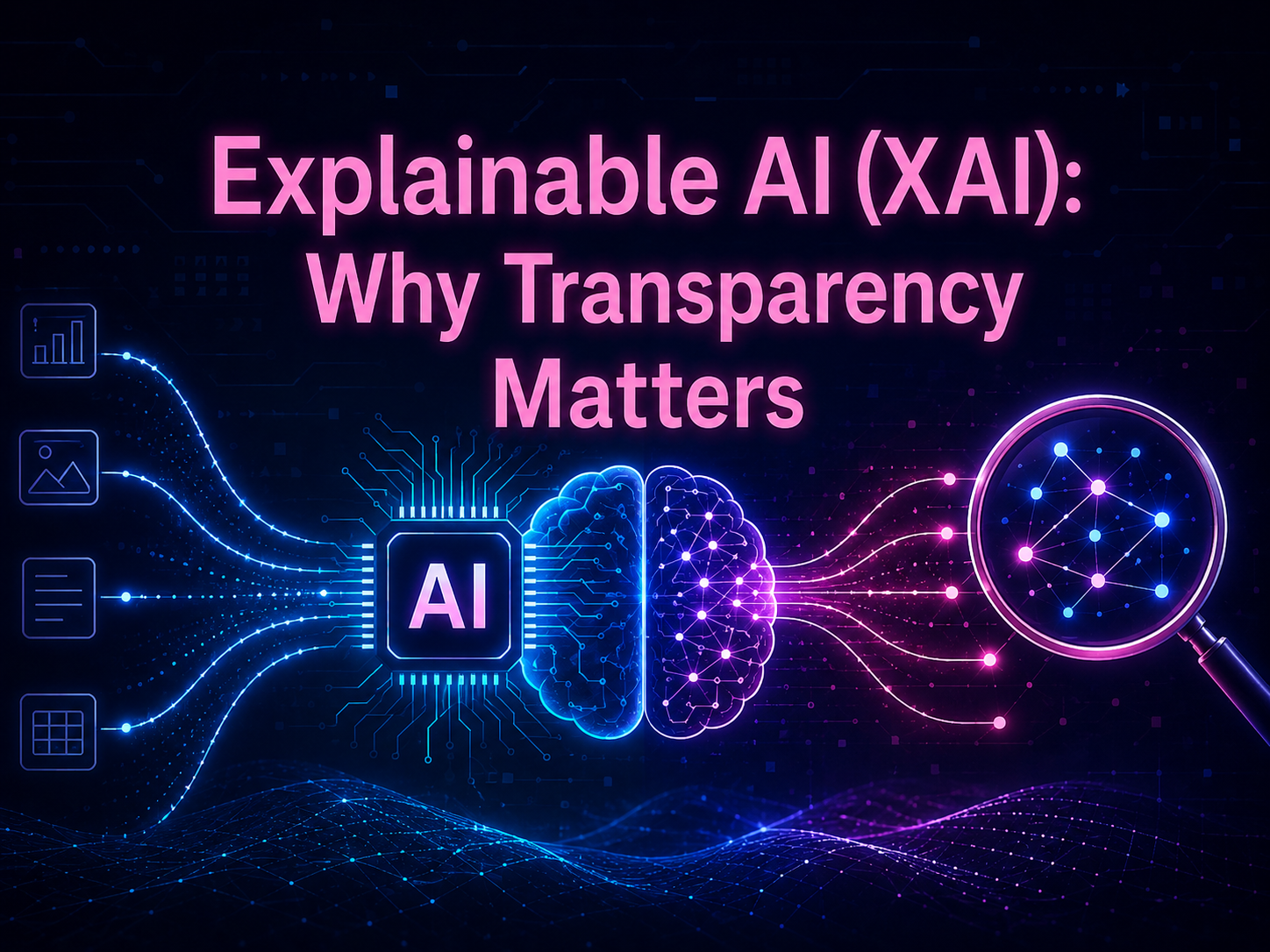
A lot of AI systems operate in a “black box.” They offer solutions but it is difficult for individuals to understand how those solutions were developed. This is where Explainable AI (XAI) is crucial.
The goal of explainable AI is to make AI systems simpler to understand so that people can use them sensibly and with confidence.
What is Explainable AI (XAI)?
AI systems that are able to explain how and why they arrive at a conclusion or prediction are referred to as explainable AI (XAI). It offers explanations for the result rather than just displaying it.
For example:
Conventional AI: “Loan application denied”
Explainable AI: “Loan application denied because income level was below requirement and debt ratio was too high.”
Instead of accepting the choice without question, the second result helps individuals understand it.
XAI aims to make AI clearer rather than less strong.
Why Transparency Matters in AI?
Transparency allows users to see what data AI used and how it arrived at its conclusions. This is important because real people are increasingly impacted by AI decisions.
Consider using a GPS application.
If it unexpectedly changes your path, you might have more faith in it if it explains:
“Ahead, there is traffic. There is a quicker path available.”
Confidence is strengthened by such explanation. AI functions similarly. Users benefit from transparent AI:
- Recognizes choices
- Identify mistakes
- Establish trust
- Boost responsibility
- Use AI with greater assurance
Users might not be able to determine if AI made a wise choice or a serious error in the absence of transparency.
The Problem with Black-Box AI
Though some advanced AI models handle huge amounts of data and generate extremely accurate results, it can be challenging to understand their basic logic.
This leads to issues.
Example 1: Healthcare
Let’s say an AI system determines that a patient is at a high risk of illness.
Doctors must be aware of:
- Which symptoms were important?
- Which test findings affected the prediction?
- To what extent does the system have confidence?
Doctors cannot safely rely on the outcome without an explanation.
Example 2: Banking
Let’s say AI denies someone a loan.
In the absence of an explanation, the applicant is unable to understand:
- What impacted the choice?
- If there was a mistake?
- How to increase the chance of future approval?
Trust is reduced by that confusion.
Benefits of Explainable AI
- Builds Trust
When people understand technology, they are more likely to trust it. Users are more at ease accepting the result if AI provides clear explanations of its recommendations.
For example:
A shopping website states:
“You previously looked for wireless audio products, so we suggested these headphones.”
Confidence is improved by the explanation.
- Improves the Making of Decisions
AI shouldn’t take the role of human judgement. Users are able to combine machine insights with human judgement when they understand why AI makes recommendations.
For Example:
Doctors might use AI analysis together with medical experience before final treatment decisions.
- Helps in Bias Detection
AI uses data to learn. AI could mimic unfair patterns found in training data. Explainability helps the identification of these issues.
For Example:
Explanations can show whether judgements were impacted by unrelated circumstances if a hiring system routinely favors some candidates.
- Encourages Accountability
Organizations should be able to explain results if AI influences significant choices. Systems that are transparent make it simpler to assign responsibility and improve procedures.
Real-Life Applications of Explainable AI
- Healthcare
AI is used by doctors to assist with diagnosis and therapy choices. Explanations aid medical practitioners in understanding:
- Important medical indications
- Levels of confidence
- Reasons for projections
- Finance
AI is used by banks for:
- Acceptance of a loan
- Identification of fraud
- Evaluation of credit
Customers expect logical reasons for financial choices.
- Education
Education can be customized with AI tools. Rather than simply imparting knowledge, explainable systems can show:
“Recent quiz scores declined, so more practice is advised.”
- Self-Driving Vehicles
Self-driving systems need to make judgements quickly. In order to increase safety and understand why the vehicle behaved in a particular way, engineers want explanations.
Challenges of Explainable AI
- Simplicity vs Complexity
Although they are more difficult to explain, highly advanced AI models frequently perform well. Though occasionally less effective, simpler models could be simpler to understand.
- Different Users Require Different Justifications
Technical details might be of interest to a data scientist. A typical user might only be interested in a clear explanation. It is difficult to provide explanations for various audiences.
- Users May Be Confused by Too Much Information
Decisions should be made clearer by an explanation, not more difficult. A good XAI should strike a balance between simplicity and accuracy.
The Future of Explainable AI
Transparency will probably become more essential as AI enters more aspects of daily life.
AI systems in the future might concentrate on:
- More clear explanations for decisions
- Improved user control
- More fair outcomes
- Increased responsibility
- Improved human-AI cooperation
Building AI that is both intelligent and trustworthy is the goal.
Conclusion
Explainable AI helps in unlocking artificial intelligence’s “black box.” Instead of providing answers without explanation, it explains the logic behind choices. AI increasingly affects healthcare, economics, education and many other fields, which means transparency is important. People can trust AI more, recognize its errors and make better judgements when they understand how it operates. AI’s future will depend not just on intelligence but also on how well that intelligence can be described.
Read More:
- Artificial General Intelligence (AGI): Myth or Reality?
- What is Artificial Intelligence (AI)? History, Types, Applications, Benefits & Drawbacks
- What is Claude AI and How Does It Work? Features, Applications & Models
- Prompt Engineering Explained: Practical Examples and Best Practices
- Neural Networks Explained: How They Work, Types & Applications