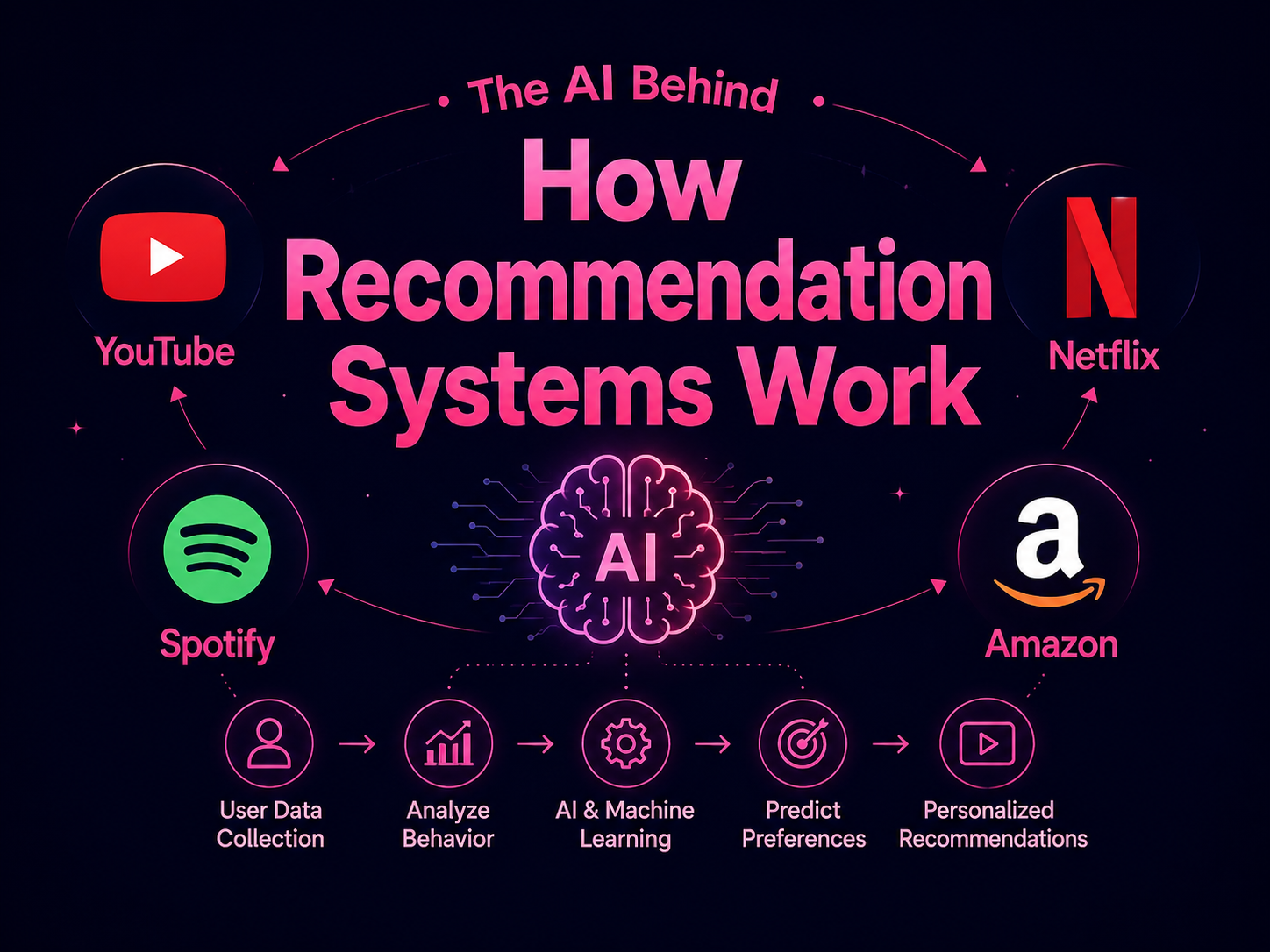
Millions of people use netflix to stream movies, spotify to listen to music, youTube to watch videos and amazon to shop every day. Have you ever wondered how these platforms seem to know just what you could find interesting?
Recommendation systems is the answer. After analyzing user’s behavior, these AI-powered systems recommend goods, services or information based on your preferences. They are important in maintaining user engagement and improving their entire experience.
What are Recommendation Systems?
A recommendation system is a kind of artificial intelligence that makes predictions about a user’s likes based on their interactions, behavior and preferences. These systems provide each user with a personalized experience instead of displaying the same content to all users.
For example
- YouTube suggests videos that you might like to watch next.
- Netflix makes movie and TV show recommendations based on your past viewing habits.
- Spotify generates personalized music recommendations and playlists.
- Products that you are likely to buy are suggested by Amazon.
The primary objective is simple- to assist users in rapidly finding relevant material.
Why Recommendation Systems Are Important
Millions of videos, songs, movies and products can be found on digital platforms. Users would spend a lot of time looking in the absence of recommendations.
Recommendation systems assist by:
- Time savings
- Improving the customer experience
- Increasing participation
- Promoting the discovery of content
- Increasing revenue and sales
These systems are among the most beneficial uses of AI for businesses.
How Recommendation Systems Collect Data?
AI need data before it can make recommendations. It gather data like:
- User Behavior
- Watched videos
- Streamed movies
- Songs played
- Items purchased
2. User Interactions
- Likes and dislikes
- Reviews and ratings
- Remarks
- Shares
3. Search History
User’s enquiries are tracked by the system, which relies on data to figure out their interests.
4. Watch or Listening Time
A person’s level of enjoyment can be determined from how long they spend watching a movie or listening to a music.
5. Location and Device Information
Some suggestions might also take into account:
- Preferences for languages
- Type of device Location
- The time of day
AI uses all of this data to create a user profile.
Types of Recommendation Systems
- Filtering Based on Content
This approach suggests products that are comparable to what a consumer has previously enjoyed.
For example:
YouTube might suggest more AI-related content if you regularly view videos about AI. Similarly, Netflix will recommend more action films if you like them.
The features of the content itself are the system’s main focus.
- Collaborative Filtering
This method examines how comparable users behave.
For example:
Netflix may suggest a new film to User B if User A and User B have similar preferences in movies.
The concept is: “People with similar interests often like similar things.”
Since it can identify interests that customers might not even be aware they have, this method is popular.
- Hybrid Recommendation Systems
The majority of large platforms use a variety of strategies.
A hybrid system might take into account:
- User actions
- Similar user’s content features
- Look up past searches
- Present-day patterns
This strategy produces better results than depending just on one technique.
AI Behind YouTube, Netflix, Spotify and Amazon
YouTube
YouTube makes video recommendations based on your viewing duration, clicks, search activity and watch history. To assist viewers find new material and keep them interested on the platform, it’s AI makes an effort to predict which videos you are most likely to watch next.
Netflix
Netflix examines the movies and TV series you watch, the genres you like and the duration of your viewing sessions. It makes recommendations for specific content based on your viewing preferences and interests.
Spotify
Spotify tracks your playlists, favorite musicians, skipped songs and listening habits. Discover weekly and daily mix playlists, which introduce listeners to new music are examples of the personalized suggestions it generates using AI.
Amazon
Amazon makes product recommendations based on your browser history, purchases, product searches and shopping cart activity. Additionally, it highlights products that are frequently purchased together making it easier for buyers to locate relevant goods.
The Role of Machine Learning
The technique that gradually improves recommendation system’s intelligence is machine learning. These learning models learn from user behavior rather than rigid rules. The AI gains more information and improves its predictions as more users engage with a site.
This establishes a continuous process of learning:
- The user engages with the content.
- AI gathers information.
- Patterns are analyzed through machine learning.
- Better suggestions are produced.
- More user interactions provide more information.
As the system learns, its accuracy increases.
Challenges of Recommendation Systems
- Cold Start Issues: Since new users have little or no experience, it then becomes difficult to make recommendations that are accurate.
- Data Privacy Issues: Huge sets of data of users are used by recommendation systems, raising privacy concerns.
- Filter Bubbles: Users may encounter similar content over and over again which limits their exposure to fresh concepts and perspectives.
- Bias in Suggestions: AI occasionally favors well-known content while ignoring unknown producers, products or artists.
Future of Recommendation Systems
Technology for recommendations is still developing. Future systems could be even more personalized by:
- Advanced AI models
- Analysis of behavior in real time
- Better understanding of user goal
- Multimodal AI using text, images, audio and videos
Recommendations are expected to become increasingly accurate, relevant and beneficial as AI advances.
Conclusion
Recommendation systems subtly influence many of our online experiences from the videos we watch to the goods we purchase. These solutions rely on AI and machine learning to help organizations increase customer happiness and engagement while assisting users in finding relevant content fast. Recommendation systems are expected to grow increasingly intelligent, personalized and integrated into our digital lives as technology develops.
Read More:
- What Are AI Agents? How Autonomous AI Systems Work
- Explainable AI (XAI): Why Transparency Matters
- Artificial General Intelligence (AGI): Myth or Reality?
- Prompt Engineering Explained: Practical Examples and Best Practices
- Neural Networks Explained: How They Work, Types & Applications
Leave a Reply